
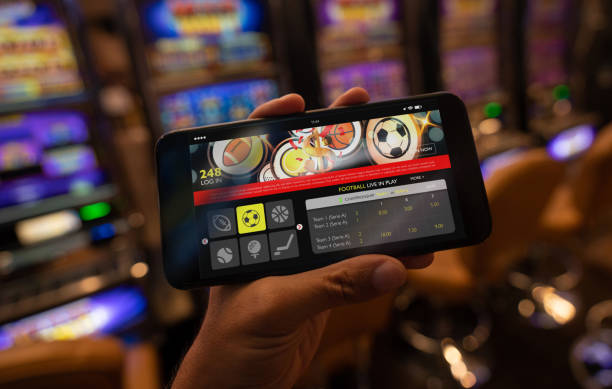

When a user interacts with a digital wagering interface, the experience is designed to be seamless, fast, and intuitive. However, behind the colorful buttons and shifting odds of a platform like fair deal live, there is a complex engine of high-end technology, global data networks, and mathematical modeling. Understanding the internal mechanics of these platforms is essential for any informed participant. It strips away the mystery of how odds move and how your transactions are processed, allowing you to treat the activity as the data-driven industry that it actually is.
The Role of the Oddsmakers and Traders
The heart of any betting platform is the “Odds Compiling” department. These are professional mathematicians and sports analysts who use historical data, current team form, and statistical probability to set the initial prices for an event. They don’t just guess; they use proprietary algorithms to determine the likelihood of every possible outcome. Once these “opening odds” are live, the “Traders” take over.
Traders monitor the flow of money in real-time. Their job is not necessarily to predict the winner, but to manage the platform’s risk. If too much money is placed on one side of a bet, the traders will lower those odds and increase the odds on the opposition. This ensures the platform maintains a balanced book, allowing them to earn their margin regardless of the final result of the match.
Low-Latency Data Integration
For a platform to offer live betting, it must receive match data faster than the broadcast on your television. Satellite and cable TV feeds often have a delay of five to twenty seconds. Online betting sites circumvent this by paying for “Low-Latency” data feeds directly from the stadium or specialized sports data providers.
This is why you might see a “Market Suspended” message on your account just moments before a goal is scored or a wicket falls on your screen. The platform’s servers have already received the data via high-speed fiber-optic networks. This synchronization of data ensures that the odds being offered are always reflective of the absolute current state of play, preventing “courtsiding”—a practice where people at the stadium try to bet before the bookmaker updates the odds.
Random Number Generators in Virtual Gaming
While sports betting relies on real-world events, the “Casino” and “Virtual Sports” sections of a platform rely on a piece of software called a Random Number Generator (RNG). This is a complex mathematical formula that produces a sequence of numbers that lack any pattern.
In a digital slot machine or a round of roulette, the RNG is constantly running in the background, even when no one is playing. The exact millisecond you click “Spin,” the software pulls the result from the RNG. This ensures that every single round is an independent event, completely unaffected by what happened in the previous round. These systems are regularly audited by third-party testing agencies to guarantee that the mathematical “House Edge” remains exactly as advertised and is never manipulated.
Secure Financial Gateways and Ledger Systems
Managing thousands of deposits and withdrawals every hour requires a highly secure financial architecture. When you add funds to your account, the money doesn’t just sit in a simple digital folder. It is processed through a Payment Gateway that uses the same level of encryption as international banks.
Behind the scenes, the platform maintains a “Closed-Loop” ledger system. This is a security measure where, whenever possible, funds must be withdrawn using the same method that was used for the deposit. This prevents unauthorized individuals from accessing your account and sending your balance to a different bank account. This automated ledger also tracks “Wagering Requirements” for bonuses, ensuring that promotional funds are used according to the rules before they are converted into withdrawable cash.
Geo-Fencing and Regulatory Compliance
Every time you log in, the platform performs a “Geo-Location” check. This technology uses your IP address and GPS data to ensure you are in a jurisdiction where the platform is legally allowed to operate. If you try to access the site from a restricted country, the system will automatically block your access.
Furthermore, the backend is integrated with global databases to perform “Sanction Screenings” and “Identity Checks.” This is part of the Anti-Money Laundering (AML) protocols. The system automatically cross-references your registration details with government databases to ensure the person creating the account is exactly who they claim to be. This invisible layer of security is what keeps the ecosystem safe for legitimate users.
Server Stability and Scalability
During massive events like a World Cup Final or the Super Bowl, betting platforms experience a surge in traffic that would crash a standard website. To handle this, they use “Cloud Scaling” technology. This allows the platform to instantly increase its server capacity during peak hours.
The architecture is often distributed across multiple global data centers. If one server goes offline, another immediately takes its place, ensuring that users don’t lose access to their active bets during critical moments of a match. This infrastructure is also protected by robust DDoS (Distributed Denial of Service) mitigation systems, which defend the site against cyberattacks designed to slow down or crash the interface.
The Logic of the User Interface
The front-end of the platform is designed based on “User Experience” (UX) principles that prioritize speed. The “Bet Slip” is the most important piece of code on the front end. It must calculate potential returns, check for odds changes, and confirm the wager in a fraction of a second.
When you add a selection, the bet slip sends a request to the central server to lock in that price. If the odds change during that microsecond, the system is programmed to either reject the bet or ask you to accept the new price. This “Accept Odds Changes” logic is a crucial backend setting that prevents disputes and ensures that both the user and the platform are operating on the same set of numbers at the moment of confirmation.
Verification and Settlement Engines
Once a sporting event concludes, the “Settlement Engine” takes over. It receives a verified final result from at least two independent data sources to ensure accuracy. Once the result is confirmed, the engine automatically identifies all winning bet slips associated with that event and calculates the payouts.
This process is entirely automated. Because it is handled by code rather than human manual entry, thousands of accounts can be credited with winnings simultaneously within minutes of the final whistle. This speed of settlement is one of the primary benchmarks used to judge the quality of a modern betting platform, as it allows users to quickly access their funds for the next event.