

Calls and puts are two of the most traded contracts in the world of options trading. Although they do so in rather different ways, both are essential in assisting traders in placing bets on the market’s trajectory. A trader’s ability to predict market moves can be greatly enhanced by knowing how to evaluate open interest in calls and puts. The dynamics of call and put options, their importance in options trading, and how open interest analysis may provide you with a clear picture of market mood will all be covered in this article.
1. First, what are put and call options?
It’s critical to comprehend what call and put open interest options represent before delving into their analysis.
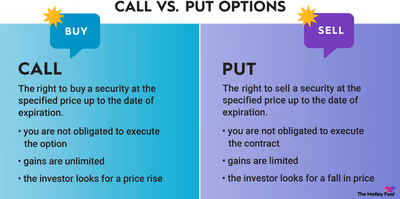
Call Option: Before a given expiration date, the holder of a call option has the right, but not the responsibility, to purchase an underlying asset at a given striking price. When traders anticipate an increase in the price of the underlying asset, they usually purchase calls.
On the other hand, a put option grants the holder the right—but not the responsibility—to sell an underlying asset before to the option’s expiration date at a predetermined strike price. When traders anticipate a decline in the price of the underlying asset, they purchase puts.
These options are crucial tools in contemporary trading since they give traders multiple alternatives for risk management, position hedging, and price movement speculation.
2. What is Open Interest?
The total number of active options contracts, including calls and puts, that have not been closed, exercised, or expired is known as open interest. In essence, it keeps track of how many contracts are still open at the end of the trading day. Since it represents market activity and liquidity, open interest is a crucial metric. While low open interest may imply a lack of interest or liquidity, high open interest in an option usually implies robust market involvement.
The total number of open call contracts is known as call open interest in the context of options trading, and the total number of open put contracts is known as put open interest.
3. Recognizing the Effects of Growing Public Interest
Because it shows that more traders are placing positions in a specific asset, rising open interest is frequently interpreted as an indication of high market conviction. However, what does increasing open interest in puts or calls mean, and what connection does it have to market sentiment?
Growing Call Open Interest: An increase in call open interest may be a sign that traders are growing more optimistic about the asset. More traders are starting positions in the hopes that the asset’s price would increase. Bullish market momentum is indicated if the price is rising in tandem with this increase in call open interest. The price of the item is expected to continue rising, and traders are prepared to place bets on this outcome.
Increasing Put Open Interest: On the other hand, an increase in put open interest suggests that traders may be growing more pessimistic. In anticipation of a drop in the price of the underlying asset, more traders are buying puts. This is a sign of gloomy mood and traders setting up their positions to profit from the anticipated drop in value if it coincides with a falling price.
4. Examining Open Interest in Relation to Price Changes
Analyzing open interest in conjunction with price swings is one of the most important strategies for analyzing it. Open interest and price activity together might help traders better understand the mood of the market.
Increasing Prices with Increasing Call Open Interest: A strong bullish trend is indicated when prices rise and call open interest rises. Traders are anxious to enter positions in order to profit from the rising price trend since they are certain that it will continue. This combination is frequently observed in markets that are moving, as price action validates the increasing optimism.
Increasing Prices with Increasing Put Open Interest: If the price is rising and put open interest is also rising, this may indicate that the market is becoming cautious. Despite the present strong trend, traders may be holding defensive positions or hedging their positions in anticipation of a possible dip or reversal.
Declining Prices with Increasing Put Open Interest: The negative view is strengthened when the price is declining and put open interest is increasing. The rising open interest indicates greater trust in this negative attitude, and traders are placing bets on additional declines.
decreasing Prices with Increasing Call Open Interest: A possible reversal or contrarian mood may be indicated by decreasing prices accompanied by an increase in call open interest. In the hopes that the market will eventually recover and climb once again, traders may be purchasing calls at cheaper rates.
5. How Market Sentiment Can Be Inferred from Open Interest
One of the most useful instruments for determining market sentiment is open interest. It might offer vital information about traders’ sentiments toward a specific asset or market trend.
Bullish Sentiment: The market may be growing more optimistic in an upward advance if rising call open interest and rising prices are present. When traders anticipate that the asset will continue to rise, this is frequently an indication of positive mood.
Bearish Sentiment: Conversely, increasing option open interest in a dropping market may suggest that traders are growing more wary or anxious in anticipation of future drops. This points to a pessimistic attitude, with traders anticipating that the downward trend will continue.
Neutral Sentiment: If there is a lot of open interest but no movement in the price, it may indicate that traders are waiting for a breakout in either direction and the market is unsure. Low price movement combined with high open interest could indicate a range-bound market where traders are uncertain about what to do next.
6. Liquidity & Open Interest
Liquidity is another crucial consideration when comparing call and put open interest. Better liquidity is usually correlated with higher open interest, which is crucial for traders who wish to enter and exit positions with little slippage. Additionally, it guarantees that options prices accurately represent market mood, lowering the possibility that a lack of activity at a specific strike price may deceive investors.
Call Liquidity: High call open interest at particular strike prices may be a sign that traders are searching for particular resistance levels or price targets. Setting entry points or aiming for take-profit levels can benefit from this.
Liquidity in options: In a similar vein, traders anticipating a downturn may find that substantial open interest in options at particular strike prices indicates important areas of worry or important support levels. Knowing the locations of the most active puts can help you identify possible price objectives or reversals.
7. Using Open Interest Analysis to Trade Calls and Puts
There are numerous ways for traders to hone their techniques using open interest analysis. A few trading tactics that use open interest are as follows:
Purchasing Calls in a Bullish Market: A strong uptrend may be indicated if open interest in calls is increasing in tandem with the price of the underlying asset. In order to profit from the expected move higher, traders can think about purchasing calls or call spreads.
Purchasing Puts in a Bearish Market: Growing put open interest during a downtrend may indicate additional declines. To take advantage of the anticipated drop, traders can try to purchase options or set up put spreads.
Selling Calls or Puts: Traders may try to sell calls or puts in order to benefit from the high premiums and low volatility if there is abnormally high open interest in one direction but the price is stationary or moving against it.
8. Integrating Other Indicators with Open Interest
Even while open interest is a crucial signal, traders should employ other tools as well. A more comprehensive understanding of market circumstances can be obtained by combining open interest analysis with additional technical and fundamental indicators. Among the indicators to take into account are:
Volume: Volume can support the open interest patterns and demonstrate the robustness of the price movement. In general, a strong trend is indicated by increased open interest and rising volume.
Implied Volatility: Implied volatility helps traders determine whether the market anticipates a big change in the asset and provides information about how costly options are.
Support and Resistance Levels: Since traders frequently use these levels for entrance and exit, knowing where the price has historically responded can help validate open interest trends.
9. Market News’s Function in Open Interest Analysis
The open interest trends in calls and puts are significantly influenced by market news. For example, traders may increase call open interest if a company publishes great results because they are betting on the stock price rising. Conversely, put open interest may rise as traders brace for a decrease in the event of bad news or a general market slump. When examining open interest, keep in mind that large news events can have a big influence on market sentiment.
10. Final Thoughts: The Influence of Open Interest in Trading Options
To sum up, comparing call and put open interest is a useful way to gauge market mood. Traders can learn a lot about whether the market is turning bullish or bearish by attentively observing how open interest in calls and puts changes in tandem with price moves. This study can significantly enhance a trader’s decision-making process when paired with other technical indicators and sensible trading tactics.
Knowing the patterns of open interest puts traders in a position to seize market opportunities and helps them avoid rash judgments. Regardless of your level of experience, monitoring open interest and how it relates to price changes can provide you a competitive advantage in the quick-paced world of financial markets.